
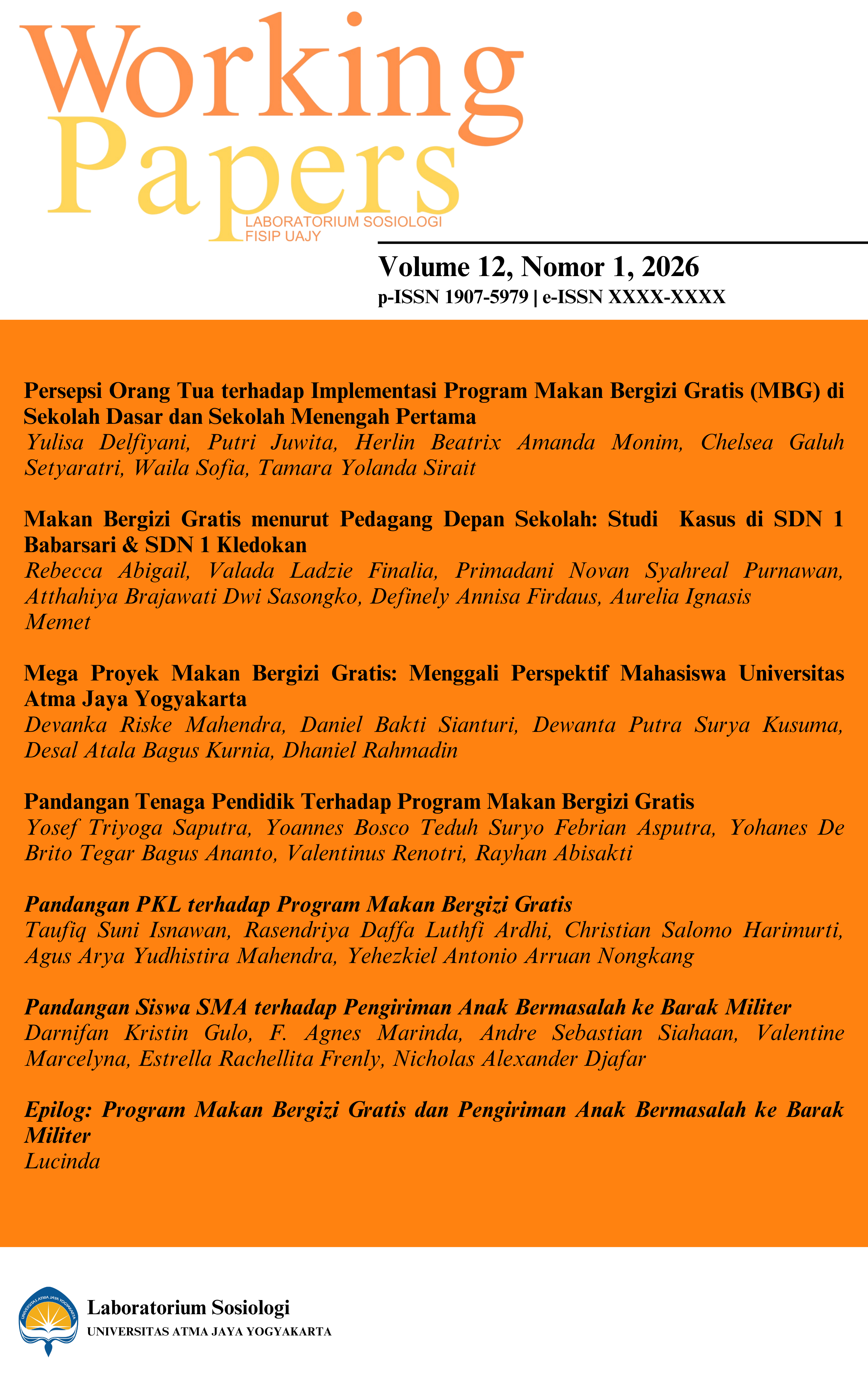
Parents’ Perceptions of the Implementation of the Free Nutritious Meals (MBG) Program in Elementary and Junior High Schools
Article Sidebar
Main Article Content
Abstract
The Free Nutritious Meal (MBG) Program is a government policy aimed at improving students' nutritional status while supporting the quality of education. This study examines parents' perceptions of the implementation of the MBG Program at SDN Pakel Yogyakarta and SMPN 10 Yogyakarta. A descriptive qualitative approach was employed, with political communication serving as the analytical framework. Data were collected through in-depth interviews with twelve parents. The findings indicate that most parents perceive the MBG Program as an initiative to provide free lunches and improve children's nutrition; however, their understanding of its broader strategic objectives remains limited. Parents acknowledged that the program helps reduce household expenses but also expressed concerns regarding food quality, transparency in program management, targeting accuracy, and limited public participation in the evaluation process. Therefore, the effectiveness of the MBG Program depends not only on the provision of nutritious meals but also on transparent governance, two-way communication, and active community participation to ensure that its nutritional and educational objectives are achieved sustainably.