
The Free Nutritious Meal Program According to School-Front Vendors: A Case Study at SDN 1 Babarsari & SDN 1 Kledokan
Article Sidebar
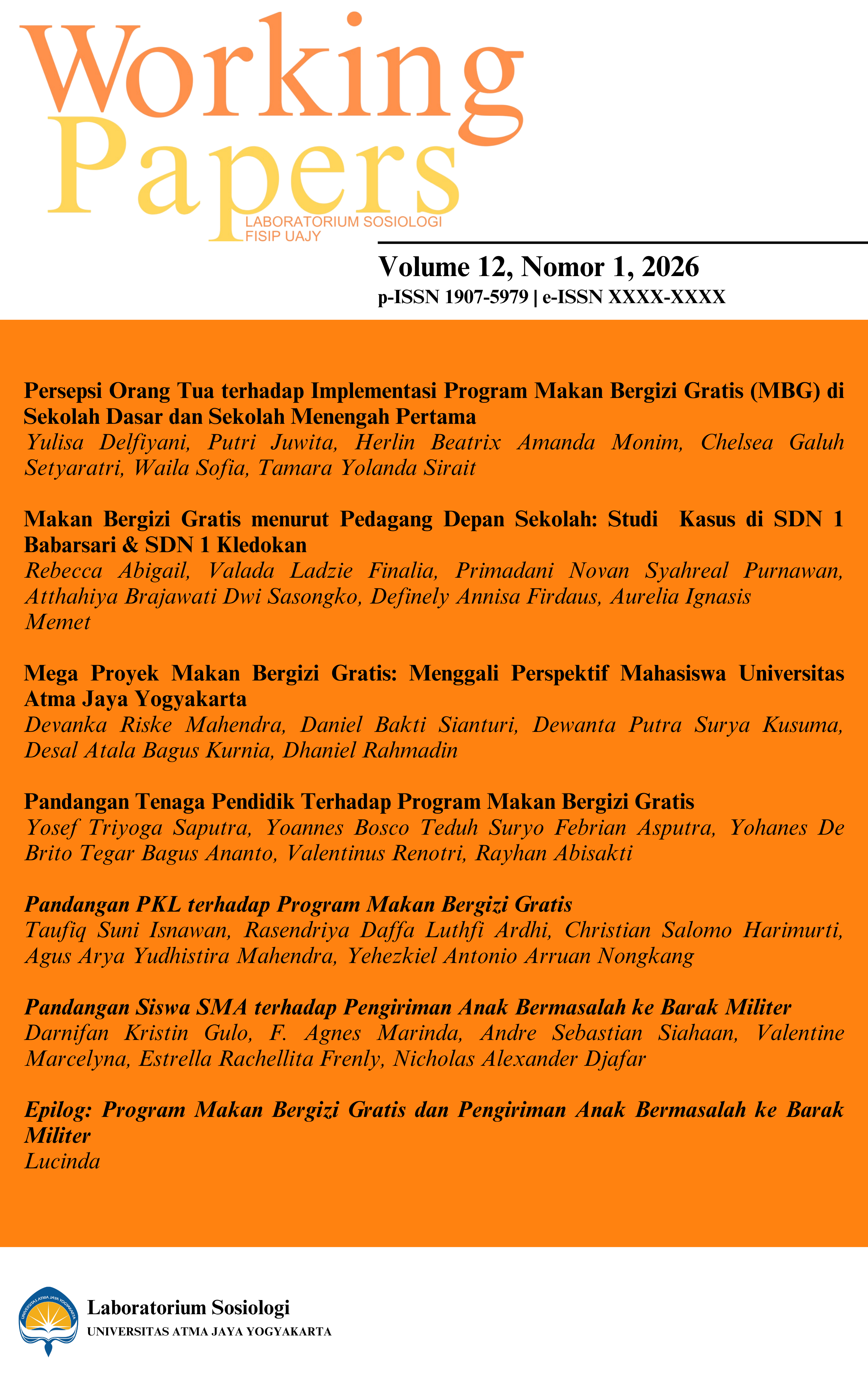
Main Article Content
Abstract
This study discusses the Makan Bergizi Gratis (MBG) program from the perspective of school-front vendors at SDN 1 Babarsari and SDN 1 Kledokan. The research is based on questions concerning vendors' knowledge of the program, their perceptions of its benefits, and the possible social and economic impacts that may emerge around schools. This study uses a qualitative approach by interviewing 12 vendors and analyzes the findings through political communication theory and the linear communication model. The findings show differences in knowledge between vendors in the two school areas. Vendors around SDN 1 Babarsari tend to have a better understanding of the goals and benefits of MBG, while vendors around SDN 1 Kledokan generally know the program only in broad terms. Economically, most vendors have not experienced a significant decline in income because students still buy snacks, especially after school hours. The study concludes that the implementation of MBG requires more inclusive communication, regular evaluation, stronger food quality control, and greater attention to informal economic actors surrounding schools